
There’s something truly special about the scent of violet. It’s not just one single note; it’s a whole story. So, what does violet smell like? Sometimes it’s powdery and sweet, like a vintage love letter. Other times, it’s surprisingly green and earthy with a modern edge. This captivating violet fragrance is often a masterfully blended violet accord, designed to capture its generous, lingering character. It’s a flirtatious and dreamy scent that adds a touch of fantasy to any blend.
Why not have a go at these selected fragrances from Scentbird-and prepare your violet getaway!
What Does Violet Smell Like?
When we talk about the scent of violet in perfume, we’re usually referring to one of two distinct sources: the flower or the leaf. Each brings a completely different character to a fragrance, which is why two perfumes with “violet” in their name can smell worlds apart. Understanding this difference is the first step to finding a violet scent that you truly love. It’s all about knowing whether you lean more toward the soft, powdery sweetness of the petals or the crisp, green freshness of the leaves. One evokes vintage romance, while the other feels modern and dewy.
The Scent of Violet Flowers vs. Violet Leaf
The violet flower, or viola odorata, has a scent that is famously soft, powdery, and sweet with a subtle woody undertone. It’s a smell often associated with classic cosmetics, like a vintage lipstick or a luxurious face powder. The flower’s aroma is known for its “generous, lingering presence,” creating a feeling of romantic fantasy. On the other hand, violet leaf absolute is a total contrast. It delivers a very green, earthy, and watery scent, often with a cool, metallic edge reminiscent of freshly cut cucumber. Perfumers use violet leaf to add a touch of natural, dewy freshness to a composition, making it feel crisp and contemporary.
The Violet Plant: More Than Just a Pretty Flower
Long before its notes were captured in perfume bottles, the humble violet plant was a fixture in gardens, wild fields, and traditional apothecaries. This small but mighty flower is more than just a pretty face; it has a rich history of being used for everything from food to folk remedies. Violets are common wildflowers that are surprisingly resilient and easy to find, often popping up in backyards and meadows. Their recognizable heart-shaped leaves and delicate purple blossoms have made them a favorite for centuries, holding a significance that goes far beyond their beautiful appearance and enchanting scent.
How to Identify the Violet Plant
If you’re new to foraging, violets are a great place to start because they are so easy to spot. Look for low-growing plants with distinctly heart-shaped leaves and five-petaled flowers, which are most often deep purple but can also be blue, white, or yellow. You’ll typically find them in moist, shady areas of your yard or in woodlands. However, identifying the exact species can be a challenge. According to Wildfoods 4 Wildlife, many types of violets look alike and can easily cross-pollinate, or “hybridize,” making it difficult to tell them apart without a trained eye. For most purposes, though, recognizing a common wild violet is simple enough.
Edible and Medicinal Uses of Violets
Beyond their delicate beauty, violets have been a valuable resource in both the kitchen and the medicine cabinet for generations. Both the leaves and flowers of the common violet are edible and have been used to add color to salads, make floral syrups, and candy for cake decorations. Their use doesn’t stop there; traditional herbalism has long recognized the plant for its gentle but effective medicinal properties. From providing essential vitamins to soothing common ailments, this unassuming flower packs a surprising wellness punch that has been valued for centuries.
A Source of Vitamins and Nutrients
Don’t let their small size fool you; violets are a powerhouse of nutrition. The leaves and flowers are packed with vitamins A and C, with the leaves containing a particularly high concentration of Vitamin C. In fact, some sources say they contain more Vitamin C by weight than oranges. Traditionally, violets were also used as a mild laxative, especially the yellow violet varieties. Herbalists also considered them a “blood cleanser,” believing they could help purify the body. It’s amazing to think that these common backyard flowers offer so many nutritional benefits.
Traditional Medicinal Properties
In herbal medicine, violets are known for their cooling and moistening qualities. According to the Chestnut School of Herbal Medicine, they are considered a “blood cleanser” that helps stimulate the lymphatic system, which is crucial for immune health. These properties make them especially useful for respiratory issues. Violets have been a go-to remedy for soothing dry, hacking coughs, bronchitis, and even whooping cough. An infusion or syrup made from the plant can help calm irritation and inflammation in the throat and lungs, providing gentle relief from persistent coughing spells.
A Note on Safety, Harvesting, and Wildlife
If you decide to forage for violets, it’s important to do so responsibly and safely. Since it can be difficult to distinguish between common and rare violet species, it’s best to harvest only from abundant patches in areas you know haven’t been treated with pesticides or herbicides. When you gather, follow the “1/3 Rule”: never take more than one-third of a single plant or patch. This ensures the plant can continue to thrive and that there’s plenty left for local wildlife. Always leave the roots in the ground to allow the plant to grow back next season.
The Color Violet: Science and Symbolism
The name “violet” brings to mind a specific, rich hue that has captivated artists, royalty, and rebels for centuries. But what exactly is the color violet, and how is it different from purple? The answer lies in a fascinating mix of science, history, and culture. From its place on the light spectrum to its symbolic meaning in different eras, the color violet has a story as deep and complex as the fragrance of the flower it’s named after. It’s a color that represents everything from luxury and power to spirituality and counter-culture, making it one of the most meaningful shades in the palette.
The Science Behind the Color
Scientifically speaking, violet is a true spectral color. This means it has its own unique wavelength of light, found at the very end of the visible spectrum between blue and invisible ultraviolet light. According to Wikipedia, its light waves measure between approximately 380 and 435 nanometers. This makes it a pure color that can’t be created by mixing other colors of light. It’s a distinct band of light that our eyes perceive, just like red, orange, yellow, green, and blue. This scientific purity is part of what makes the color so vibrant and unique.
Violet vs. Purple: What’s the Difference?
So, what’s the difference between violet and purple? While we often use the terms interchangeably, they are technically not the same. As we just learned, violet is a spectral color with its own wavelength. Purple, on the other hand, is a composite color. It doesn’t have its own spot on the spectrum; instead, our eyes and brain create the sensation of purple when we see a mix of red and blue light. In the world of pigments and paint, you can mix red and blue to get purple, but you can’t mix anything to get a true, spectral violet.
A Rich History of Meaning
The color violet carries a wealth of symbolic meaning that has shifted and evolved through history. For much of the ancient world, it was a color reserved for the elite. The dye was incredibly expensive and difficult to produce, making it a status symbol that only the wealthiest and most powerful could afford. Over time, its meaning expanded to include themes of spirituality, creativity, and even rebellion, adopted by different movements and artists to convey their ideals. Its journey through culture is as rich as the color itself.
From Royalty to Rebellion
For centuries, violet was synonymous with wealth and power. Roman emperors and magistrates wore togas dyed with Tyrian purple, a hue closer to violet, and Queen Elizabeth I forbade anyone but close relatives of the royal family from wearing it. Because of this long-standing association, violet is often linked to luxury and nobility. However, in the early 20th century, the color was adopted for a very different reason. Suffragettes wore purple, white, and green to symbolize dignity, purity, and hope in their fight for the right to vote, turning a symbol of royalty into one of rebellion.
Violet in Art and Modern Culture
As synthetic violet pigments became more accessible in the 18th and 19th centuries, artists began to embrace the color with enthusiasm. Post-Impressionist painter Vincent van Gogh was particularly fond of it, often using violet in his expressive works. He famously paired it with its complementary color, yellow, to create dynamic and vibrant contrast in his paintings of flowers and landscapes. This artistic embrace helped solidify violet’s place as a color of creativity, emotion, and individuality, a reputation it still holds today in fashion, design, and art.
Exploring Violet Fragrances
Now that you know the difference between the powdery flower and the green leaf, you can start to explore the world of violet fragrances with a new perspective. Perfumers use these two notes to create a huge range of scents, each with its own personality. A fragrance centered on the violet flower might feel romantic, classic, and comforting. It can evoke a sense of fantasy, making you feel like you’ve stepped into a secret garden. These perfumes often have a soft, cosmetic-like quality that is both elegant and timeless, perfect for when you want to feel put-together and sophisticated.
On the other hand, a scent that highlights violet leaf is likely to feel modern, fresh, and invigorating. It’s the kind of fragrance you’d reach for on a warm day or when you need a burst of clean, green energy. These perfumes can be sporty, minimalist, or even edgy, depending on the other notes they’re paired with. The best way to truly understand the versatility of this ingredient is to try different perfumes that feature it. With a Scentbird subscription, you can sample various violet-infused scents each month, allowing you to discover whether you’re drawn to the dreamy flower, the crisp leaf, or a clever combination of both.
Fragile Violet: A Delicate, Modern Scent
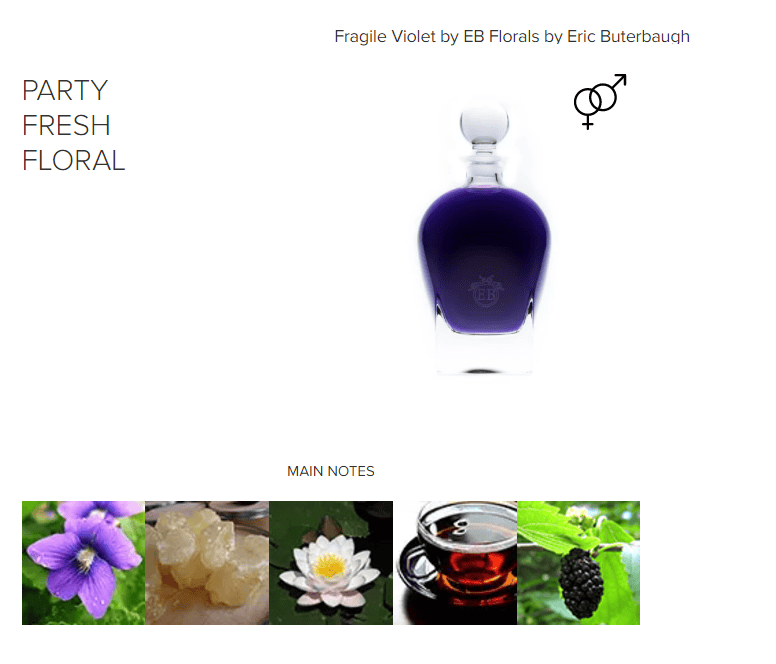
Who needs pixie dust for a one-way ticket to Neverland? Fragile Violet by EB Florals has all of the ingredients for a magical getaway. With musk, lotus, black tea, mulberry and of course, violet, Fragile Violet is a bottled wish come true.
It feels as if this perfume is perfect spring day perfume that you can wear to celebrate the end of nature’s slumber party. You can feel the smell of warmer air circling around you, like a hungry cat.
When you find yourself missing all those scents that dominate during springtime, this is the perfume that will make it up to you in a matter of second.
Fresh, floral scent that clings on your skin and clothes a long time after you have applied it.

Black Bold: An Unexpected Violet Fragrance
Softening the strong masculine vibes, Black Bold by Kenneth Cole embodies a rich aftermath of a rainy afternoon. Violet leaves, basil, ginger, incense mix with suede to create and indoor sensation of luxury.
A unique and beautiful blend of violets and leather that simply have to get under your skin. Imagine an haute-couture high-end luxury leather jacket with a scent-laden lining of violets that screams perfection to me.
Kenneth Cole has pledged to bring luxury to perfection, and he never disappoints. If anyone had any doubts about making a strong, masculine fragrance with a dominating violets-based accord, then please note that Kenneth Cole has cast these doubts away with the utterly manly fragrance called Black Bold. Sexy and Seductive: Black Bold!

Florence: A Romantic, Classic Violet Perfume
Just like a cool treat on a hot, summer day, Florence by Tocca will melt away all of your troubles! Violet is combined with flowers like gardenia, tuberose, and pear, and mingles with green notes for a fresher perfume. Beautifully executed violet themed fragrance, the one that will have your nose glued to your wrists.
Find Your Perfect Violet Scent on Scentbird
If you’re looking for an exclusive fragrance – Scentbird is the right place to go. ScentBird specializes in all kinds of unique fragrance tones, including all of the fragrances mentioned in this post. A properly chosen fragrance can really transform the perception of your style and underline your personality.
In case you are not acquainted with Scentbird, it is a luxury fragrance subscription service that sends you a 30-day supply of a fragrance of your choice for $14.95/month.
You’ll receive a selection of fragrances each month for $14.95, and add other perfumes you want to try to your queue for an upcoming delivery.
For $14.95, Scentbird is your monthly pass to fragrant elegance, chicness and refinement.
To join Scentbird or learn more about this luxurious fragrance service, click here: https://www.scentbird.com
Smell as Good as You Look and Feel
Frequently Asked Questions
Why do some violet perfumes smell powdery and sweet while others are green and fresh? It’s a great question, and the answer comes down to which part of the plant is used. Perfumers can get two very different notes from the violet. The scent from the flower itself is what gives you that soft, powdery, and slightly sweet aroma you might associate with vintage cosmetics. The scent from the leaf, however, is a total contrast; it’s crisp, earthy, and watery, almost like the smell of freshly cut cucumber. So, you're really smelling two distinct ingredients.
How can I figure out which type of violet fragrance is right for me? A good way to start is by thinking about the perfumes you already love. Do you tend to go for classic, romantic florals? If so, you’ll probably enjoy fragrances that highlight the violet flower. If you prefer modern, fresh, or "clean" scents, you might be more drawn to the crispness of the violet leaf. Ultimately, the best way to know for sure is to try them on your own skin and see how they evolve throughout the day.
The blog mentions violets are edible. Can I make my own perfume from the violets in my yard? While it’s wonderful to connect with the plants around you, creating perfume is a highly scientific art. The scents used in fragrances are made through complex extraction processes to create stable, safe, and long-lasting notes, which isn't something you can replicate by simply crushing flowers at home. It's much safer to enjoy foraged violets in things like salads or syrups (from a pesticide-free source, of course) and leave the perfume-making to the experts.
I'm still a little confused about the difference between violet and purple. Does it matter for the fragrance? It's a common point of confusion, so you're not alone. In simple terms, violet is a pure color on the light spectrum, while purple is a mix of red and blue. For fragrance, this distinction is more about storytelling than science. The name "violet" can hint at the perfume's character. A scent might use the color's historic ties to royalty to feel luxurious and classic, or it could tap into its association with creativity and individuality for a more modern feel.
Is a small sample really enough to decide if I like a perfume? This is exactly why a Scentbird subscription is so helpful. You don't just get a tiny one-use sample. You receive a generous 8 mL vial, which is enough for about a month of regular use. This gives you the chance to live with a scent, wearing it to work, out with friends, or just at home. You get to experience how it changes on your skin over hours and in different settings, which is the only way to truly know if a fragrance is the right fit for you.
Key Takeaways
- Know Your Notes: Violet fragrances come in two main styles, so check the perfume's description. "Violet flower" creates a soft, powdery, and romantic scent, while "violet leaf" offers a green, crisp, and modern feel.
- A Surprisingly Versatile Scent: Don't assume all violet perfumes are the same. This note can be the star of a delicate floral, add a fresh twist to a bold masculine cologne, or bring a classic touch to a complex, green fragrance.
- Wear the Symbolism: The color violet has long been associated with luxury, creativity, and individuality. Choosing a violet fragrance is a way to wear that story, whether you want to feel powerful, artistic, or romantic.


