
Fragrance layering is the practice of combining two or more scents, whether that’s two perfumes, or a scented lotion and a perfume, to create something more personal. It’s a way of building real depth: a grounding base underneath, then something brighter or more contrasting on top, tuned to your mood rather than resigned to a single bottle for every occasion.
Here’s a step-by-step guide on how to actually do it, and why it’s totally worth the extra step.
Why layering fragrances, is, ultimately, an act of freedom
I once went out with someone who was obsessed with the fragrance I was wearing. Since then, the scent–Flowerhead by Byredo, now discontinued–became my go-to choice before dates for the next year or so. I wore it on winter dates, during dates in the spring, and even a little during the summer.
To a former beauty editor boss of mine, I had committed a sin: failing to switch scents depending on the season or location. Over time, though, the ritual began to feel repetitive, especially when I wanted to lean into different moods. I started to ask myself why I was wearing the fragrance in the first place. Isn’t it more important to align with your own mood than to rely on a crowd-pleaser? The fact that the fragrance was discontinued last year, at least here in France, nudged me back toward something I had been missing: play. The getting-ready process suddenly became fun again.
Playing with fragrance, however, is an entirely different game. It takes more time, and this is precisely why it is more personal. You get to know yourself better in the process. And knowing yourself better allows you to make more intentional decisions, which is, ultimately, a form of freedom.
How to layer fragrances: a step-by-step guide
Step 1: Start with the grounding base
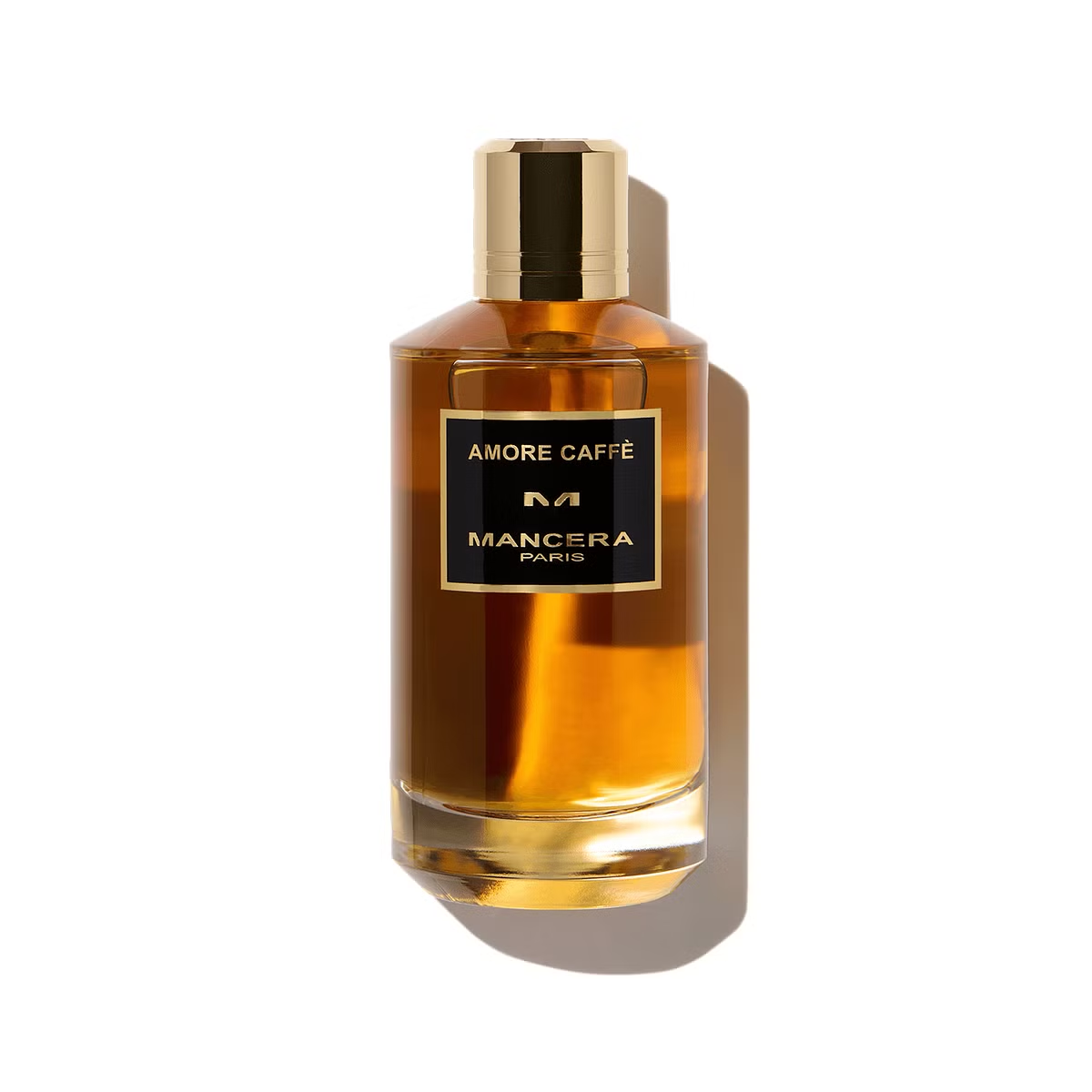
Begin with your more grounded, musky, woody, or creamy scent. This can be a scented body cream or an oil with a subtle scent that you like. You can also go ahead and reach for your more grounded fragrance. Essentially, think of this as the canvas that will anchor everything that follows. MANCERA PARIS Amore Caffe, for example, is a warm scent with notes of coffee, amaretto, and amber–certainly distinct but subtle enough to be mixed with a lighter fragrance.
Step 2: Add Contrast or dimension
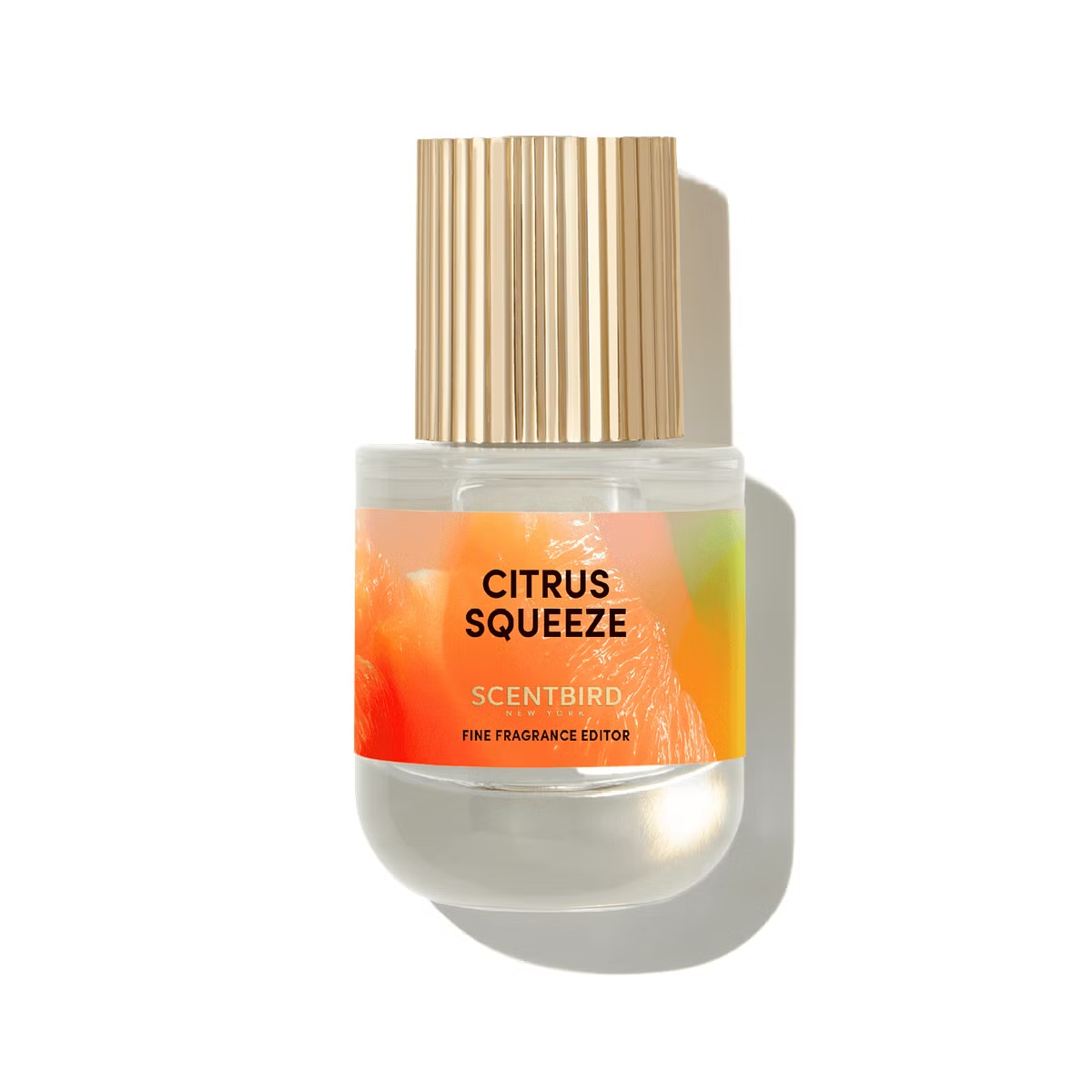
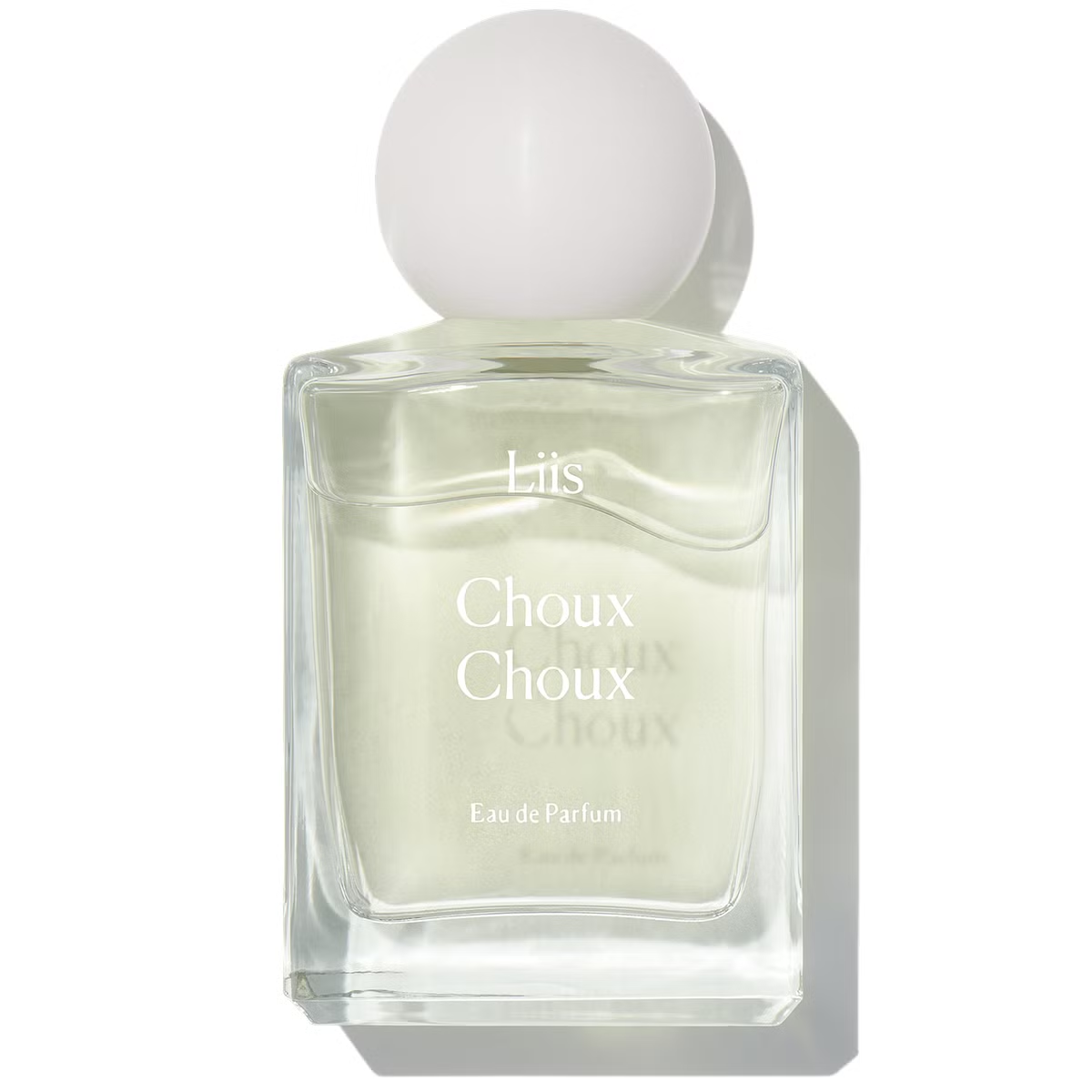
Next, introduce a contrasting element, perhaps something brighter, floral, citrusy, or spicy. This second layer shouldn’t overpower the base, but rather interact with it. Alternatively, you can intensify the overall effect by choosing a lighter fragrance that shares similar notes, creating depth. Spray lightly and allow a few seconds between applications so the notes have time to settle. An example would be combining SCENTBIRD Citrus Squeeze Fragrance Editor and LIIS Choux Choux, which both have citrusy elements, the latter being slightly heavier.
Step 3: Be open to adjustments
Layering is rarely perfect on the first try. Take a moment to assess. Does it feel too sweet? Too sharp? You can soften it with a neutral musk or amplify with a single spritz. In the process, you will get to know your fragrance families even better.
Step 4: Let it evolve
The true magic of layering happens over time. As the top notes fade and the base settles, new combinations may emerge–and that evolution is all part of the process.
A bonus tip: know your scent families
So, how do you start mixing without creating a mess? It helps to understand the basics of scent families, as listed in Scentbird’s exhaustive Notes Library. Think of fragrances in broad categories like floral (rose, jasmine), woody (sandalwood is a popular one), fresh (citrus, aquatic), and gourmand (vanilla, coffee, even marshmallow). A great rule of thumb is to pair scents from complementary families, or to find two that share a common note. For a balanced, long-lasting combination, always apply your heavier, more intense fragrance first, something like a rich vanilla or a deep woodsy scent, and then add a lighter one on top.
A few starter blends to try
If you’re still not sure where to start, here are three combinations that follow the base-plus-contrast rule and actually work in practice.
Warm and cozy: A rich, vanilla-forward base layered with a lighter, powdery musk on top. Both lean into the same note from two different angles, one richer and more gourmand, one softer and closer to skin, so they build on each other instead of competing.
Bright and grounded: A warm, coffee-and-amaretto base with a citrus-forward fragrance layered lightly over it. The coffee anchors things, while the citrus keeps the whole combination from feeling too heavy for daytime wear.
Skin-close and musky: A soft, ambrette musk base with a single spray of something lightly sweet layered on top. This one’s built to read as barely-there and intimate rather than a full scent statement, good for anyone who wants layering without much projection.
None of these are rules, just a place to start. Once you’ve tried one, you’ll have a better sense of what you actually want more or less of next time.
How a Scentbird subscription makes fragrance layering easy
Layering sounds fun until you do the math: buying two or three full-size bottles just to test whether they work together is a genuinely expensive way to find out you don’t like the combination. This is exactly the kind of experimenting a Scentbird subscription is built for. Every fragrance ships as an 8 ml travel vial (instead of a $100+ bottle), so trying a new pairing costs a fraction of what it would to buy both outright. And, if a combination doesn’t land, you’re not stuck with two bottles you’ll never finish.
FAQs: Fragrance Layering
How many sprays of each perfume should I use when layering?
A great rule of thumb is to start with just one spray of each fragrance. The goal is to create a balanced blend, not a scent cloud. Remember to apply your stronger, heavier scent first, and then add a single spritz of the lighter one. You can always add another light spray if you feel the combination needs it, but it’s much harder to subtract once you’ve overdone it.
Do I have to spray the perfumes in the exact same spot?
Not at all! While spraying them on top of each other on your pulse points works perfectly, you can also get creative with placement. Try applying your base scent to your wrists and your lighter top scent to your neck or behind your ears. This creates a more dynamic scent experience, as different notes will become noticeable as you move.
What’s the easiest way for a total beginner to start layering?
The simplest starting point is to pair two fragrances that share a common note, like two different rose perfumes or two scents with a vanilla base. This adds depth without much risk of clashing. Another foolproof method is to use a simple, single-note fragrance like vanilla or musk as your base and then layer a more complex floral or citrus scent on top.
How do I know if my layered scent actually smells good?
Ultimately, the most important opinion is your own. If a combination makes you feel confident and happy, that’s a success. If you’re feeling unsure, try testing your new creation on a paper blotter first and let it dry for about 20 minutes. Then, ask a trusted friend for their honest opinion before you commit to wearing it for a full day.
What if I create a combination I really don’t like after I’ve applied it?
Don’t worry, it happens to everyone when experimenting! If you’re at home, you can usually remove the scent by gently washing the area with an unscented soap or wiping it with a bit of rubbing alcohol on a cotton ball. This is why testing on a small area like one wrist is always a good idea before spraying it everywhere.


