
What does rose smell like in perfume? It can smell like cool petals after rain, juicy red fruit, soft face powder, clean skin, or dark velvet. Rose is less a single scent than a flexible perfume note, and the ingredients around it determine which side you notice first.
Browse rose fragrances at Scentbird to compare the note across different perfumes while the five styles below are fresh in your mind.
In perfume, rose usually smells floral and softly sweet, but its exact character ranges from green and dewy to jammy, powdery, musky, spicy, or dark. Citrus and watery notes make it feel fresh. Fruits bring out its lush sweetness. Musk can turn it into a clean skin scent, while woods, patchouli, leather, or incense reveal its deeper side.
That range explains why someone can dislike one rose perfume and love another. Rather than asking whether you like rose in general, it is more useful to ask which version of rose feels like you. This guide will help you recognize each style, understand how a composition changes it, and test it on your own skin.
What does rose smell like in perfume?
Rose in perfume is recognizable as a floral note with a gentle sweetness, but it also has green, fruity, spicy, honeyed, and earthy facets. A perfumer can emphasize any of those facets. The finished fragrance may suggest a living garden rose, rose jam, a vintage powder puff, or petals resting on dark woods.
A flower with many facets
Fresh rose compositions often highlight the sensation of stems, leaves, water, and airy petals. They tend to feel transparent rather than dense. Sweet rose compositions amplify the flower’s naturally fruity impression, creating a ripe or jam-like effect. Powdery roses soften the edges with iris-like, violet-like, or musky textures. Dark roses use contrast, placing the flower beside spice, woods, smoke, or patchouli.
The rose itself can also be interpreted in different ways. Some compositions focus on bright, lemony freshness. Others emphasize a richer, honeyed warmth. You do not need to identify a botanical variety to enjoy the difference. Pay attention to whether the perfume makes you picture pale petals in daylight or deep red petals after dark.
Why it does not smell like one bouquet
A perfume is a composition, not a photograph of a flower. Rose interacts with every note around it and develops over time. The opening may feel sparkling and green, the heart may become plush and floral, and the drydown may leave only a soft rosy musk. Skin chemistry, weather, and application also affect which facet feels strongest.
If you want to smell several interpretations side by side, Scentbird’s guide to rose perfumes offers a useful discovery path. The key is to compare, not to judge the entire note from one bottle.
Five rose styles, from dewy to dark
The five most useful rose styles to recognize are fresh and dewy, fruity and jammy, powdery, musky, and dark. These are not rigid categories. A perfume can move between two or three of them as it dries, but the framework makes a crowded fragrance shelf easier to navigate.
| Rose style | What it may smell like | Notes that often shape it | Best starting point for |
|---|---|---|---|
| Fresh and dewy | Cool petals, greenery, morning air | Citrus, watery notes, green notes | People who prefer light florals |
| Fruity and jammy | Ripe berries, preserves, plush petals | Red fruits, plum, sweet accents | Fans of bold, juicy scents |
| Powdery | Soft cosmetics, silky petals, vintage elegance | Iris-like notes, violet-like notes, soft musk | People who enjoy polished florals |
| Musky | Clean skin, warm fabric, sheer petals | White musk, amber-like notes | Fans of subtle everyday scents |
| Dark | Velvet petals, spice, shadowy woods | Patchouli, woods, incense, leather | People who prefer dramatic scents |
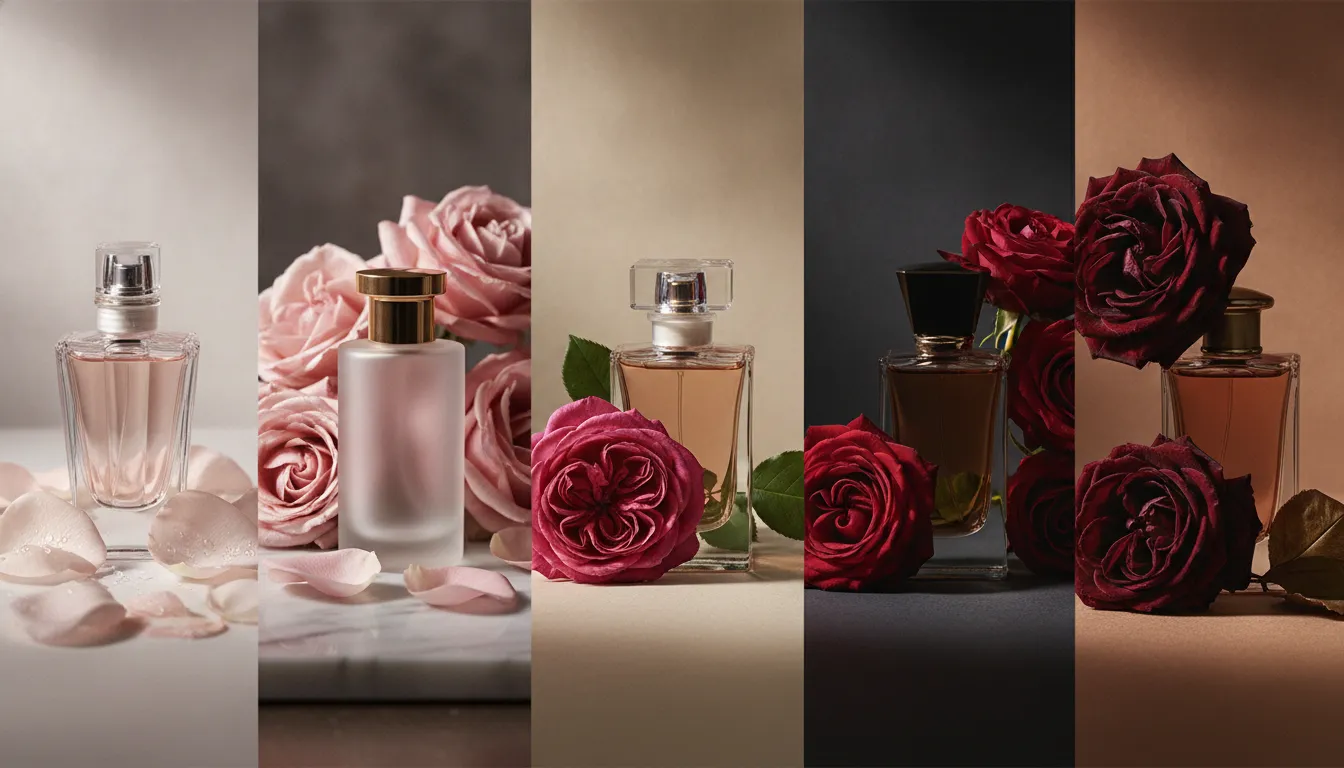
Fresh, fruity, and powdery rose
A dewy rose feels closest to a flower still growing outdoors. Green or watery accents create lift, while citrus can sharpen the petals. For a real catalog reference, compare the note lists and descriptions on Scentbird for Jo Loves White Rose & Lemon Leaves and Goutal Paris Rose Pompon. Their product pages give you verified points of comparison without reducing rose to one profile.
Jammy rose turns up the volume. It can remind you of crushed petals mixed with ripe fruit or preserves. Powdery rose moves in the opposite direction, trading juiciness for a soft, composed texture. It may feel elegant or nostalgic, but it does not have to feel dated. A clean structure or an unexpected contrast can make powdery rose feel current.
Musky and dark rose
Musky rose often sits close to the skin. It can feel airy, warm, and quietly sensual rather than obviously floral. Montale Roses Musk is a verified Scentbird catalog example to examine when exploring that pairing. Read its product page, then notice how rose and musk change from the first spray to the drydown on your skin.
Dark rose is the dramatic end of the spectrum. Woods, patchouli, spice, leather, or smoky notes can make petals feel shadowy and textured. If that direction interests you, explore Scentbird’s feature on Ex Nihilo Spiky Muse and the catalog page for Room 1015 Hollyrose. These are useful discovery links because they let you investigate named fragrances rather than relying on a generic description.
Why can two rose perfumes smell completely different?
Two rose perfumes can smell completely different because supporting notes control the flower’s brightness, sweetness, texture, and depth. Concentration and structure affect how quickly those supporting notes appear. Your skin and environment then add another layer of variation.
Supporting notes change the mood
Imagine rose beside lemon, green leaves, and transparent musk. The result is likely to feel brighter and lighter than rose beside plum, patchouli, and warm woods. Neither composition is a more accurate rose. Each emphasizes a different part of the note’s natural range.
Texture matters as much as smell. Aldehydic or airy effects can make petals feel sparkling. Creamy notes can make them feel smooth. Dry woods can give them a papery edge, while amber-like warmth can make them feel plush. Thinking in textures helps when words such as floral or sweet seem too broad.
The scent changes from opening to drydown
The first minute is only the opening. Fresh top notes often make rose seem crisp at first, then fade to reveal a sweeter or muskier heart. Hours later, the floral impression may become subtle while woods, musk, or warm base notes remain. Testing the full drydown prevents you from choosing only for a dazzling opening.
Application matters too. A light spray can make a dense rose feel more transparent. Warm weather may amplify sweetness, while cool air can make a composition seem drier. That is why the best answer to what a rose fragrance smells like is often a timeline rather than one adjective.
Explore Scentbird’s fragrance catalog and save several different rose interpretations to compare instead of committing to one style too quickly.
How to find the rose scent that suits you
Start with scents you already enjoy, then use their shared qualities to choose a rose style. If you love citrus and green fragrances, begin with dewy rose. If fruit-forward scents attract you, try jammy rose. Musk lovers may prefer a skin-like rose, while fans of woods, spice, or incense may feel at home with dark rose.
Use named fragrances as reference points
Catalog examples make abstract style words easier to understand. Review IRFE Centifolia Rose, Acqua di Parma Rosa Nobile, and Liis Rose Struck on Scentbird. Look at each verified note list and description. Choose the one whose surrounding notes overlap most with fragrances you already wear.
This is also the best way to avoid assumptions based on a name alone. A rose-themed name tells you the note matters, but it does not tell you whether the fragrance will feel bright, fruity, powdery, clean, or dark. The complete composition provides that context.
A simple testing plan
- Choose two contrasting styles. Compare a dewy or musky rose with a jammy or dark rose.
- Read the complete note lists. Identify the supporting notes you already know you enjoy.
- Smell each opening on a blotter. Record your first impression without deciding yet.
- Test the favorite on skin. Skin reveals warmth, projection, and the real drydown.
- Check it after several hours. Notice which part remains after the bright opening fades.
- Wear it on another day. A second wear confirms whether the style fits your routine.
Does rose perfume always smell old-fashioned?
No. Rose perfume can feel classic, but it does not always smell old-fashioned. The impression depends on styling. A powdery, richly composed rose may suggest vintage glamour, while a rose paired with transparent musk, crisp citrus, unusual spice, or dry woods can feel minimalist or experimental.
Why some rose scents feel vintage
Rose has a long history in perfumery, and many people connect it with familiar cosmetics, soaps, or formal floral bouquets. Powdery textures and dense sweetness can strengthen that association. For someone who loves polished, romantic scents, that can be the appeal rather than a flaw.
Modern sides of rose
Modern rose often plays with contrast. It may feel clean but not soapy, sweet but edged with spice, or floral but grounded by woods. Gender labels are not very helpful here. A person who usually avoids traditional florals may enjoy a dry, dark, or musky rose because the composition emphasizes texture and contrast instead of bouquet-like sweetness.
Compare rose perfumes by note at Scentbird and use your favorite supporting notes to narrow the options.
How should you test a rose perfume?
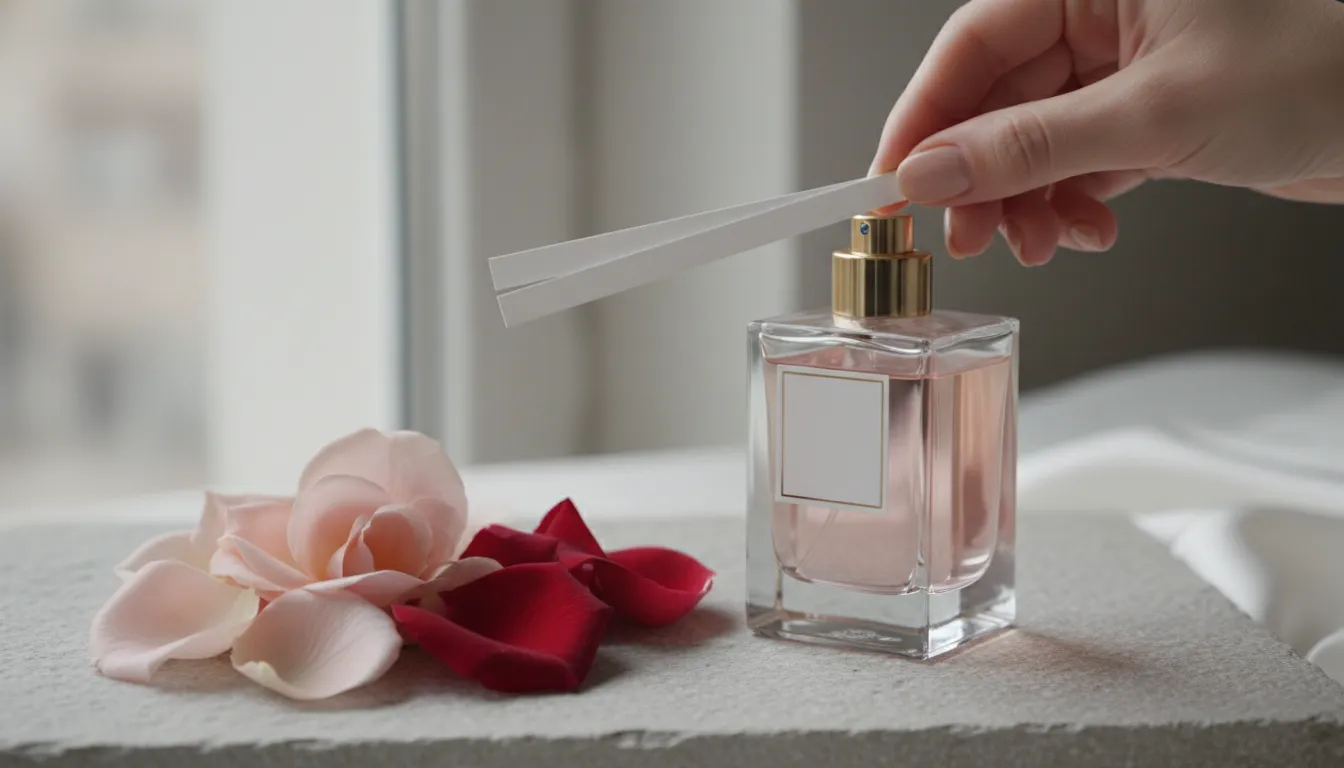
Test a rose perfume in stages: first on paper, then on clean skin, then through a complete day. This shows whether the fragrance stays fresh, becomes sweeter, turns powdery, or settles into musk and woods. It also separates the excitement of the opening from the part you will actually wear longest.
Blotter test and first impressions
Spray two blotters and label them. Smell from a short distance rather than pressing the strip against your nose. Write down three quick impressions, such as green, juicy, or velvety. Return after 15 minutes. This short pause often reveals whether the opening was masking the rose’s true direction.
Skin test through the drydown
Move only your favorite to skin so the perfumes do not compete. Check it after one hour and again later in the day. Ask whether you still enjoy its texture, whether the projection fits your setting, and whether the drydown resembles the style you wanted. Sampling is valuable because a fragrance can be beautiful yet wrong for your daily life.
Keep a short scent note after each wear. Over time, patterns emerge. You may discover that you consistently prefer rose with citrus, musk, woods, or fruit. Those patterns are more useful than trying to memorize every ingredient.
Frequently Asked Questions
What does a dewy rose smell like?
A dewy rose smells cool, fresh, green, and lightly watery, like petals and leaves in morning air. Citrus, green notes, or transparent musks often strengthen this effect. It is a useful starting style for someone who wants rose without dense sweetness.
Is rose perfume always sweet?
No. Rose has a natural floral sweetness, but a composition can emphasize green, spicy, musky, woody, or earthy facets instead. Supporting notes determine whether the finished perfume feels sugary, crisp, dry, clean, or dark.
What makes a rose perfume smell jammy?
A jammy rose emphasizes the flower’s ripe, fruity side. Red-fruit or plum-like accents and warm sweetness can create the impression of crushed petals or preserves. It usually feels richer and more saturated than a dewy rose.
Can rose perfume be unisex?
Yes. Rose can work in any fragrance wardrobe. Pairings with woods, spice, leather, musk, citrus, or incense often move it beyond traditional floral expectations. Choose by the composition and the way it develops on your skin, not by a gender label.
How can I choose the right rose perfume?
Identify whether you prefer fresh, fruity, powdery, musky, or dark scents, then select a rose perfume with familiar supporting notes. Compare the note descriptions, test the opening on paper, and wear the strongest candidate on skin through the drydown.
Find your version of rose with Scentbird
Rose can feel like a cool garden, a spoonful of preserves, a soft powder puff, clean skin, or a velvet petal after dark. Once you recognize those styles, choosing becomes less about whether you like rose and more about which rose belongs in your fragrance wardrobe.
Explore rose fragrances with Scentbird and compare verified catalog options one scent at a time.


