
If a fragrance label says parfum, you are looking at one of the most concentrated formats in traditional perfumery. That usually means a richer formula with more fragrance concentrate than eau de parfum or eau de toilette. The label does not guarantee one universal percentage or a fixed number of hours on skin. Understanding the term helps you shop by formula, feel, and wear experience instead of marketing language.
Take Scentbird’s Fragrance Quiz to discover scents that fit your preferences.
Parfum can be an appealing choice if you enjoy a close, lasting scent and prefer to apply a small amount. It can also be the wrong match if you want a light, airy fragrance or like to reapply throughout the day. The right concentration depends on the composition, your skin, the setting, and how you want the fragrance to develop.
What Is Parfum?
Parfum is a fragrance format made with a relatively high proportion of aromatic concentrate in a carrier, often alcohol and water. It is also called extrait de parfum, perfume extract, or simply extract, although brands do not always use these names in exactly the same way.
The word parfum describes a product category, not a single scent family. A parfum can be floral, woody, citrusy, musky, spicy, or gourmand. Concentration tells you something about the formula’s strength and texture, while the notes describe the smell itself. A rose parfum and a vanilla parfum may share a format but smell nothing alike.
Parfum is often designed to feel smooth, rounded, and close to the skin. Its opening may be less sharp than a more alcohol-forward spray, and its heart and base can remain noticeable as the fragrance unfolds. Those are common tendencies, not rules. Formula, materials, dosage, skin chemistry, humidity, and application all affect the result.
How much fragrance oil is in parfum?
Parfum is often described as containing about 20% to 40% fragrance concentrate. But there is no universal cutoff that makes every product above or below a particular number a parfum. Brands may use different formulas, naming conventions, and marketing terms. Treat a percentage as useful context when a brand publishes it, not as a promise of performance.
Fragrance concentrate is not the same thing as one ingredient called perfume oil. It is a blend of aromatic materials that gives a finished product its scent. The remainder can include alcohol, water, and other formula components. The exact balance varies by product and manufacturer.
Safety standards add another reason not to reduce a fragrance to one concentration number. The International Fragrance Association explains that its standards set restrictions, prohibitions, or specifications for certain fragrance materials and uses. These rules concern ingredient safety and product categories, not a universal definition of parfum. You can read IFRA’s explanation of fragrance standards for more context.
In practical terms, look for three pieces of information:
- The product name: Parfum, extrait, eau de parfum, and eau de toilette indicate different concentration conventions.
- The brand’s description: A brand may share a percentage, application guidance, or expected character.
- The formula’s behavior: Notice how the scent opens, develops, projects, and wears on your skin.
Parfum vs eau de parfum vs eau de toilette
Parfum, eau de parfum, and eau de toilette are fragrance formats that generally move from higher to lower concentrate, but the ranges overlap. The experience is not determined by percentage alone. Parfum often feels denser and more intimate, eau de parfum usually balances presence and versatility, and eau de toilette often feels brighter or more immediately diffusive.
| Format | Typical convention | Common wear impression | Often suits |
|---|---|---|---|
| Parfum or extrait. | Highest of these three formats, often around 20% to 40% concentrate. | Rich, smooth, and close to the skin. | Evening wear, special occasions, or people who prefer less frequent reapplication. |
| Eau de parfum. | Usually below parfum, with a broad range that varies by brand. | Noticeable, balanced, and versatile. | Day-to-evening wear and everyday signature scents. |
| Eau de toilette. | Usually below eau de parfum, with a broad range that varies by brand. | Bright, lighter, and more diffusive at the opening. | Warm weather, daytime wear, or a fresher scent profile. |
This table is a shopping shorthand, not a laboratory standard. For a focused explanation of the middle two formats, read Scentbird’s guide to what eau de parfum means and its eau de toilette explainer. Those articles cover EDP and EDT as their main subjects, while this guide keeps parfum at the center.
Is parfum the same as extrait de parfum?
Parfum and extrait de parfum are often used as near-synonyms, especially when a brand wants to describe a highly concentrated fragrance. However, naming is not perfectly consistent across the industry. One house may call a product parfum, while another uses extrait, pure parfum, or a creative name for a formula with a similar position in its range.
Do not assume that every extrait smells heavier, projects farther, or lasts longer than every parfum. A formula built with quiet woods may wear close even at a high concentration. A bright eau de parfum with tenacious materials may last longer for one person than a parfum built around volatile citrus notes.
Scentbird’s guide to extrait de parfum goes deeper into that term. Use it when your main question is what extrait means. Use this page when your main question is how to understand the label parfum and decide whether that format fits your routine.
Does parfum last longer than EDP or EDT?
Parfum often lasts longer than eau de parfum or eau de toilette, but concentration alone cannot predict an exact wear time. Fragrance longevity depends on the materials in the formula, how much you apply, your skin’s moisture and chemistry, temperature, clothing, and whether you rub or layer the scent.
Projection and longevity are also different. Projection describes how far a scent travels from your skin, especially soon after application. Longevity describes how long you can detect it. Parfum may last for many hours while staying close to the skin. An eau de toilette may project more strongly at first but fade sooner. Neither behavior is automatically better.
Skin is a changing surface. Dry skin may not hold some aromatic materials as long as moisturized skin, while heat can increase diffusion and make a fragrance feel stronger. A scent may also seem to disappear when your nose becomes accustomed to it, even though someone nearby can still notice it. For honest testing, ask a trusted person whether they can smell it later instead of relying only on your own nose.
The U.S. Food and Drug Administration notes that fragrance ingredients are used in cosmetics and that people can have individual sensitivities to cosmetic ingredients. Read the FDA’s overview of fragrances in cosmetics if you want general ingredient and labeling context. Stop using a product if it causes irritation and follow the product label.
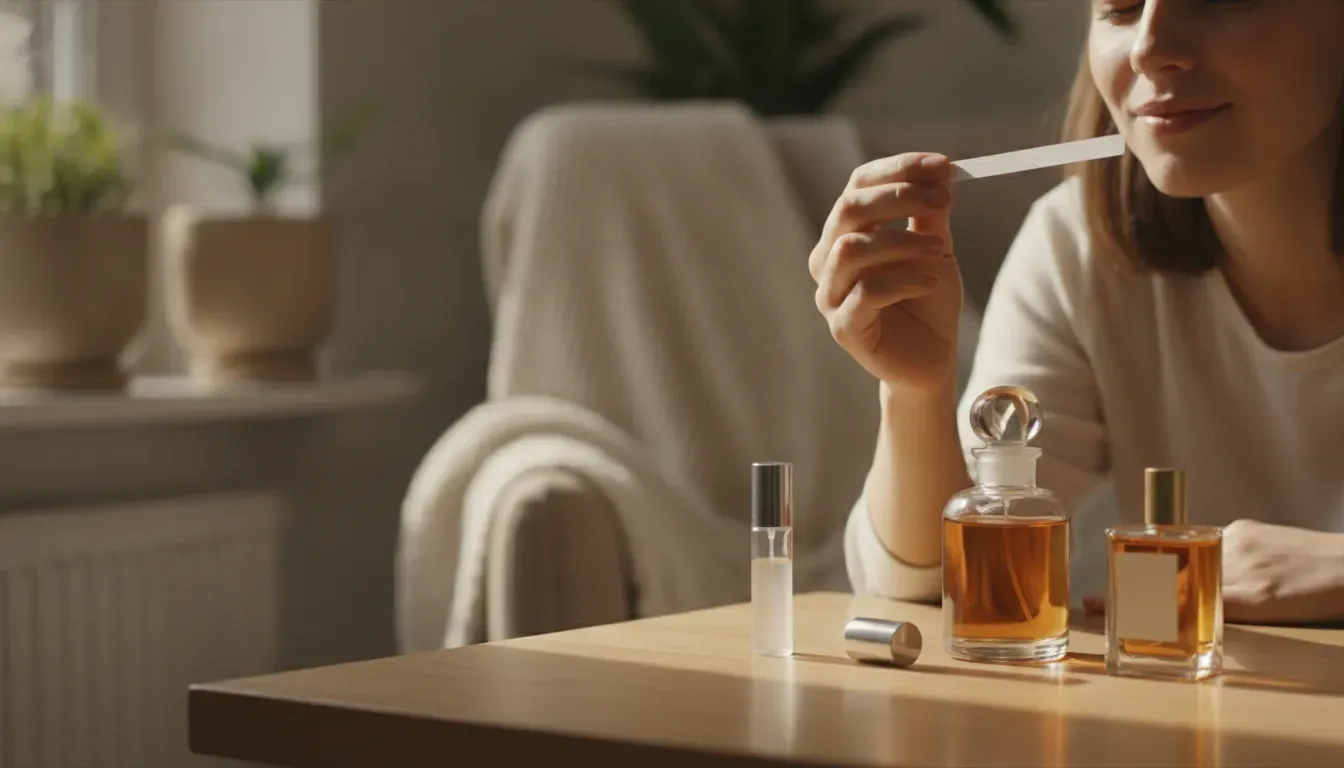
What does parfum smell and feel like?
Many parfums have a rounded, concentrated feel. The alcohol lift may be less prominent, and the fragrance can move through its notes in a gradual way. You may notice a soft opening, a fuller heart, and a lingering base that sits near the skin. These qualities are common in the format, but the perfumer’s choices matter more than the label alone.
Parfum does not have to smell dark, sweet, or intense. A parfum can be sheer, green, powdery, fresh, or transparent. A citrus-heavy parfum may still open brightly. A woody parfum may feel dry rather than sweet. If you judge the format by one familiar bottle, you may miss how wide the category can be.
Concentration can influence texture and pacing, but it does not replace the fragrance pyramid. Notes are usually described as top, heart, and base notes, though a finished formula behaves as one composition. Ingredients with different volatility evaporate and become noticeable at different rates, creating the impression of development.
What are the pros and cons of wearing parfum?
Parfum can be a strong fit when you want a focused scent that stays present without repeated spraying. It can also be less convenient in situations where you want a quick refresh or a low-commitment fragrance. Weigh the format against your habits rather than choosing the highest concentration by default.
Benefits of parfum
- Long-wear potential: A well-made parfum may remain detectable for much of the day, although no brand can guarantee the same result on every person.
- Close personal effect: Many parfums sit near the skin, which can feel polished and less overwhelming in close settings.
- Small applications: The richer format may work well when you prefer a dab or a few sprays instead of frequent reapplication.
- More time with the base: The dry-down, or late stage of wear, can have more room to develop before the scent fades.
Trade-offs of parfum
- Less predictable performance: A high concentration does not guarantee stronger projection or longer wear on your skin.
- Higher commitment: A dense scent may not be the best choice for an office, hot weather, or anyone who prefers a barely-there effect.
- Testing matters: A parfum can smell different from an EDP or EDT version of a fragrance because the formula may change along with the concentration.
- Less common availability: Some fragrance lines offer an EDP or EDT but no parfum, so the format may take more searching.
How should you apply parfum?
Start with less than you think you need. Apply parfum to clean, moisturized skin at pulse points such as the wrists, neck, or behind the ears, then let it settle. If you prefer a softer effect, spray once into the air and walk through the mist only when the product label allows that use. Do not rub your wrists together, because friction can change the way the opening develops.
For a longer-lasting result, moisturize with an unscented product before applying fragrance. You can also place a light amount on clothing, but test a hidden area first because fragrance oils or colorants may mark some fabrics. Avoid spraying near the eyes, broken skin, or other sensitive areas.
Give the fragrance time before deciding whether it works. Smell it at five minutes, thirty minutes, and several hours. The opening is not the whole fragrance. If the dry-down feels comfortable and the scent remains appropriate for your setting, you have better evidence than a quick counter test.
How can you test parfum before buying a full bottle?
Sampling is the practical answer when you are unsure about a concentrated fragrance. A blotter shows the opening and early development, but skin testing tells you more about texture, projection, and longevity. Test one or two fragrances at a time so your nose can keep them separate. Write down the name, time, and first impression if you are comparing several options.
A travel-size fragrance subscription can make this process easier by giving you smaller quantities to wear in everyday conditions. Scentbird’s fragrance service offers 8 mL sprays intended for regular use over about 30 days. Giving you more time to see how a scent fits your routine before committing to a full-size bottle. Browse Scentbird’s travel-size perfumes to explore the sample-discovery path.
Try a parfum during the conditions in which you plan to wear it. A warm commute, a quiet evening, and an air-conditioned office can make the same formula feel different. The goal is not to find the concentration that sounds most powerful. The goal is to find a scent whose character and wear pattern suit you.
How do you choose between parfum, EDP, and EDT?
Choose based on the experience you want, then confirm the choice on your own skin. Parfum may suit you if you enjoy a rich, close scent and prefer a slower dry-down. Eau de parfum may be a useful middle ground when you want noticeable presence with flexibility. Eau de toilette may work well if you like a bright opening, lighter feel, or an easy daytime refresh.
- Start with the setting: Think about work, weekends, warm weather, evenings, and shared spaces.
- Choose the desired presence: Decide whether you want a close scent, a noticeable signature, or a fresh first impression.
- Read the brand description: Look for formula details and application guidance instead of relying on a percentage alone.
- Test the dry-down: Wait long enough to experience the middle and late stages of wear.
- Sample before committing: Use a travel size when you need more than one quick test.
The Perfume Society describes fragrance strength as a spectrum rather than a rigid ladder, which is a helpful way to approach these labels. Its guide to fragrance strength from cologne to parfum offers additional background on how different formats can fit different occasions.
Frequently asked questions about parfum
What does parfum mean on a perfume bottle?
Parfum means the fragrance is presented in a relatively concentrated format, often with more aromatic concentrate than EDP or EDT. It does not identify one scent family, guarantee a fixed percentage, or promise an exact wear time. Check the brand’s own description and test the fragrance on skin for the most useful answer.
Is parfum stronger than eau de parfum?
Parfum is generally positioned as more concentrated than eau de parfum, but stronger can mean different things. It may last longer or feel richer, yet an EDP can project farther or seem more noticeable at the opening. Materials, formula design, application, and skin chemistry all influence the result.
Is parfum better than eau de toilette?
Parfum is not automatically better than eau de toilette. Parfum may be a better fit for someone who wants a close, lasting scent. EDT may be a better fit for someone who prefers a fresh, lighter, or more easily refreshed fragrance. The best format is the one that matches your preferences and setting.
How long does parfum last?
Parfum often has long-wear potential, but there is no reliable universal number of hours. Longevity changes with the formula, skin moisture, temperature, application amount, and your ability to smell the scent after becoming accustomed to it. Test the fragrance across a full day before making a judgment.
Can parfum be light and fresh?
Yes. Parfum describes a concentration format, not a required mood or note profile. A parfum can feature citrus, green notes, aquatic accords, florals, woods, musk, or other styles. The concentrate level may give the formula a fuller texture, but it does not force the fragrance to smell dark or heavy.
Use Scentbird’s Fragrance Quiz to discover your next parfum or signature scent.


