
The first time I watched Madagascar, I fell hard for the lemurs. Yes, King Julien was probably responsible for a significant portion of this. Ok, it was all King Julien, I admit.
I didn’t stop at the movie. I started reading about lemurs, and soon I collected an increasingly unnecessary bits of lemur trivia (Here’s a good one: lemurs communicate with scent so extensively that male ring-tailed lemurs literally have “stink fights,” rubbing scent from glands onto their tails and waving them at rivals.) For years, if someone asked me that weirdly revealing question, “What’s your favorite animal?” I had an answer ready: lemur.
Then I started working on the fact sheet for Sanctuary’s newest fragrance, the Bonobo scent, and discovered that, apparently, I had been backing the wrong primate all along.
Researching an animal for a fragrance brief sounds like it should involve a few tabs, a couple of interesting facts, and then back to perfume. Instead, somewhere between learning that bonobos share nearly 99% of our DNA, that females form powerful coalitions, and that they somehow come genetically equipped with what can only be described as an immaculate middle part, I had an animal identity crisis.
The bonobo was my favorite animal. I just hadn’t met it yet.
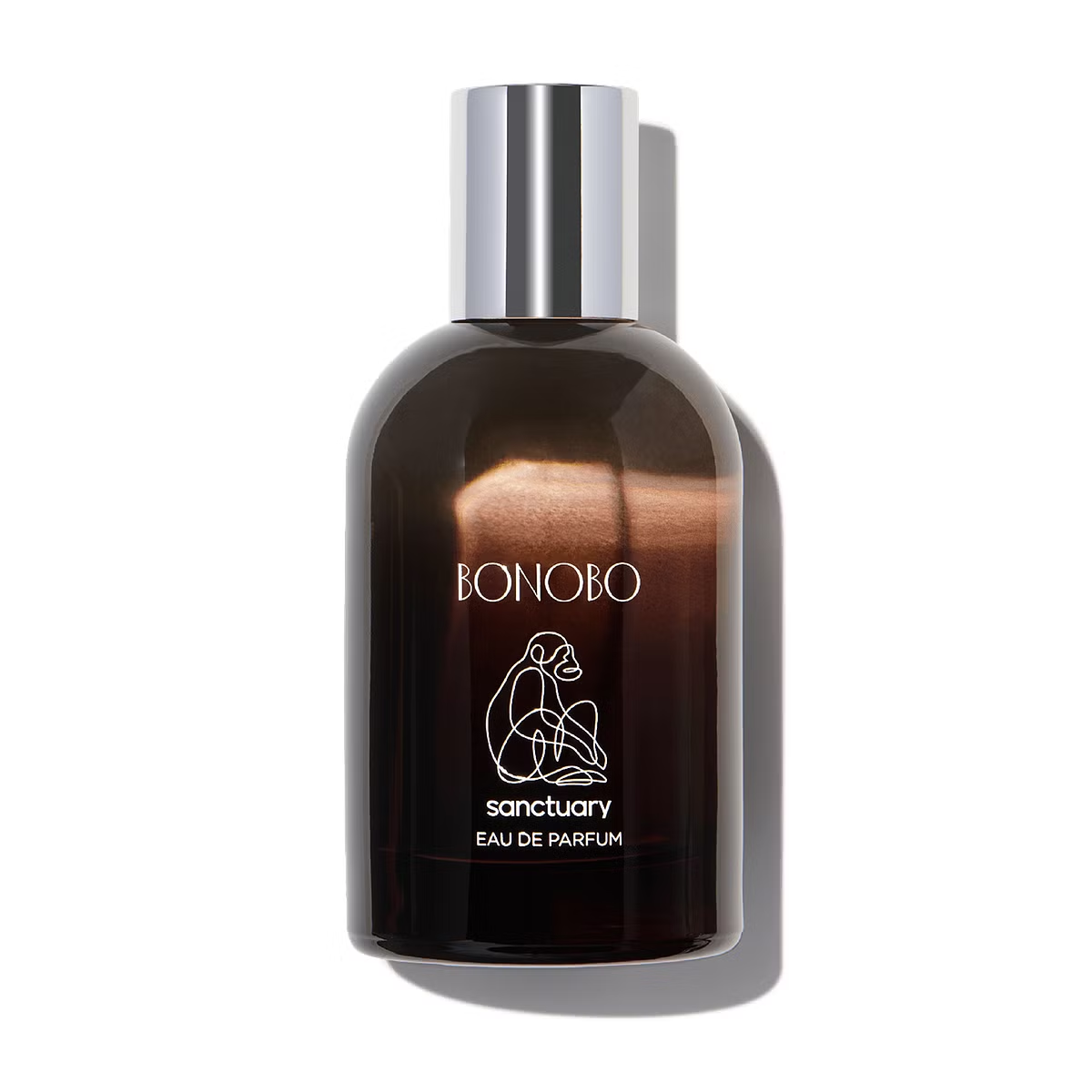
SANCTUARY Bonobo
Bonobos live in the rainforests of the Democratic Republic of Congo, where fruit makes up a major part of their diet. Their social lives are even more interesting. Female bonobos form strong alliances with one another, and those relationships give them extraordinary influence within the group. In other words: the ladies organize, the ladies cooperate, and everybody benefits.
At which point I was basically sold.
But there’s something else about them that got me. Bonobos have become famous for being the gentler cousins in our extended primate family, and while real animal behavior is obviously more complicated than the “hippy ape” nickname suggests, they are remarkably social creatures. They share food. They comfort one another. Touch and cooperation play an enormous role in keeping their communities together.
They also look like me in fourth grade, when I got curtain bangs, hated them, and wore them sleek and apart. Really cute and no, I’m not sharing a throwback pic.
Once you know all of that, Sanctuary’s Bonobo fragrance starts to make a different kind of sense.
Banana runs the show, as, frankly, it should.
It immediately connects the fragrance to the bonobo’s fruit-filled rainforest world, but unlike banana candy, banana bread, or a tropical cocktail scent, this is a green yet sweet banana scent that didn’t accidentally find its way into a perfume bottle. There’s something greener and much more alive happening around it.
Coconut palm stretches the composition upward into the canopy. Frangipani and vanilla orchid bring in the humid floral richness you imagine blooming somewhere beneath all that green. Canopy woods give the fragrance its roots.
The perfume is rather feminine (although men can wear it and will love it), lush, warm, and fruity, but what I love most is that the notes feel like they belong to the animal rather than simply being placed next to its picture.
It almost smells like environmental storytelling.
You get the fruit it eats. The flowers and palms of a tropical ecosystem. The woods of the forest it depends on. Even the fragrance’s softness feels appropriate for an animal whose social world revolves so heavily around closeness and connection.
And yes, the banana is still in charge.
Considering this is a female-led society, that also feels correct.
Unfortunately, the bonobo’s world is getting smaller. The species exists naturally in only one country, and habitat destruction and poaching continue to threaten its survival. Sanctuary gives a portion of proceeds from each purchase to organizations working to protect the animals featured in its fragrances and the habitats they depend on. 20% of proceeds from every purchase will be donated to the Friends of Bonobos – an organization dedicated to saving the Bonobos.
Which means my new favorite animal has also given me something new to worry about. Great. Exactly what I needed.
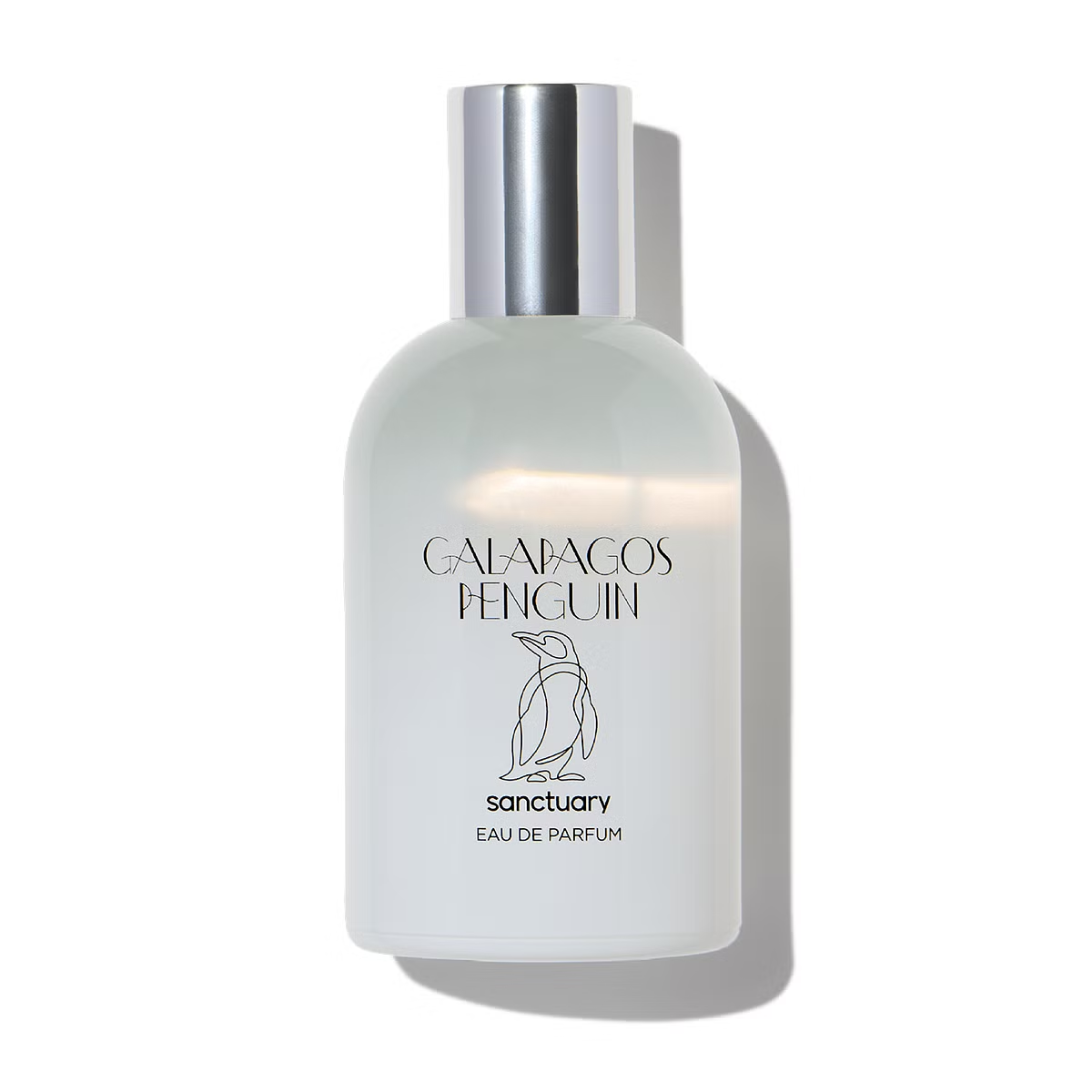
SANCTUARY Galápagos Penguin
Then there’s Sanctuary’s other new release, Galápagos Penguin, inspired by an animal that seems to have looked at the basic penguin job description and said, “No, thanks, I’ll do me.”
The Galápagos penguin is the only penguin species found in the Northern Hemisphere. A tropical penguin already sounds like someone made a mistake.
They did not.
These birds live where black volcanic rock meets cool Pacific water, swimming out to hunt before returning to shores that can become hot enough that the penguins have to actively work at staying cool. Their existence is essentially one long negotiation between sea and sun.
And Galápagos Penguin smells like exactly that tension.
Ocean mist comes first, giving the fragrance that cold rush of air you get near open water. Coastal sage and juniper make it aromatic and crisp rather than simply “aquatic,” while driftwood gives everything a dry, weathered backbone.
Then comes volcanic amber. That may be my favorite detail because it changes the entire picture. Without it, you have cool water, herbs, wood, a very handsome seaside fragrance. With it, there’s warmth underneath. Sun hitting dark rock. Heat stored in stone. The reminder that this penguin isn’t standing on an iceberg; it’s living practically on the equator.
It’s a fougère, but it feels much less like someone constructing a traditional fougère and more like someone trying to reconstruct a habitat.
And that habitat is increasingly precarious. Galápagos penguins depend on cold, nutrient-rich waters for food, and strong El Niño events can drastically reduce the fish available to them. Their population is small, their range is limited, and climate change adds another layer of pressure to an already vulnerable species.
As with Bonobo, a portion of every Galápagos Penguin purchase goes toward organizations working to protect the species and its home. 20% of proceeds from the Galapagos Penguin fragrance will benefit Global Penguin Society, an organization committed to supporting Galápagos penguin conservation and inspiring care for the ocean.
Perfume With a Very Good Rabbit Hole Attached
One of my favorite things about Sanctuary has always been that the fragrances give you a reason to look past the perfume.
You might come for the banana and leave knowing considerably more about female primate alliances than you did five minutes earlier. You might smell ocean mist and volcanic amber and suddenly find yourself reading about how a penguin manages to live at the equator and boast this new knowledge to your friends, like a party trick.
That is exactly what happened to me. I started with a fact sheet and ended up reconsidering a decades-long commitment to lemurs, developing strong opinions about bonobo social organization, and worrying about a tiny tropical penguin halfway across the planet.
And I got two very good fragrances out of it.
Not bad for a day at work.
Frequently asked questions
What is Sanctuary’s Bonobo fragrance inspired by?
Sanctuary Bonobo is inspired by bonobos in the Democratic Republic of Congo. It’s a lush, fruity floral built on banana, coconut palm, frangipani, vanilla orchid, and canopy woods. Scentbird donates 20% of proceeds from every purchase to Friends of Bonobos, an organization working to protect the species.
What does Sanctuary’s Galápagos Penguin fragrance smell like?
Sanctuary Galápagos Penguin is a fougère built around ocean mist, coastal sage, juniper, driftwood, and volcanic amber. It captures the tension between cold Pacific water and warm equatorial rock. 20% of proceeds go to the Global Penguin Society to support conservation work.
Where can I buy Sanctuary fragrances?
Sanctuary fragrances, including Bonobo and Galápagos Penguin, are available through Scentbird’s subscription, starting at 8.97 USD for the first month, then 17.95 USD per month. Each order ships an 8 mL vial, about a 30 day supply, with free US shipping and the option to skip or cancel anytime.
Why does a portion of Sanctuary’s proceeds go to conservation?
Sanctuary builds each fragrance around an at risk animal and its habitat, then donates 20% of proceeds from that scent to a group working to protect the species. Bonobo supports Friends of Bonobos, while Galápagos Penguin supports the Global Penguin Society.


